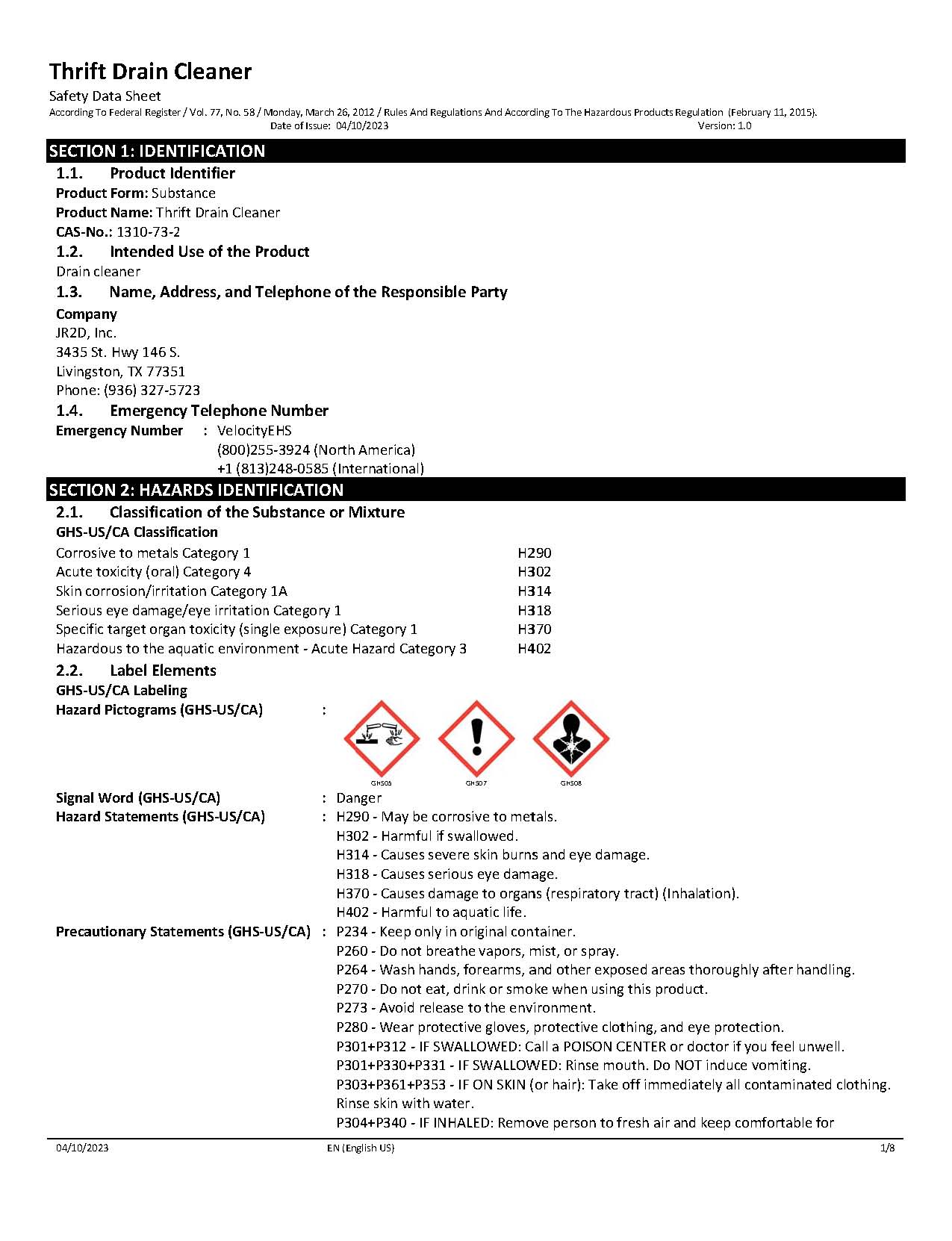
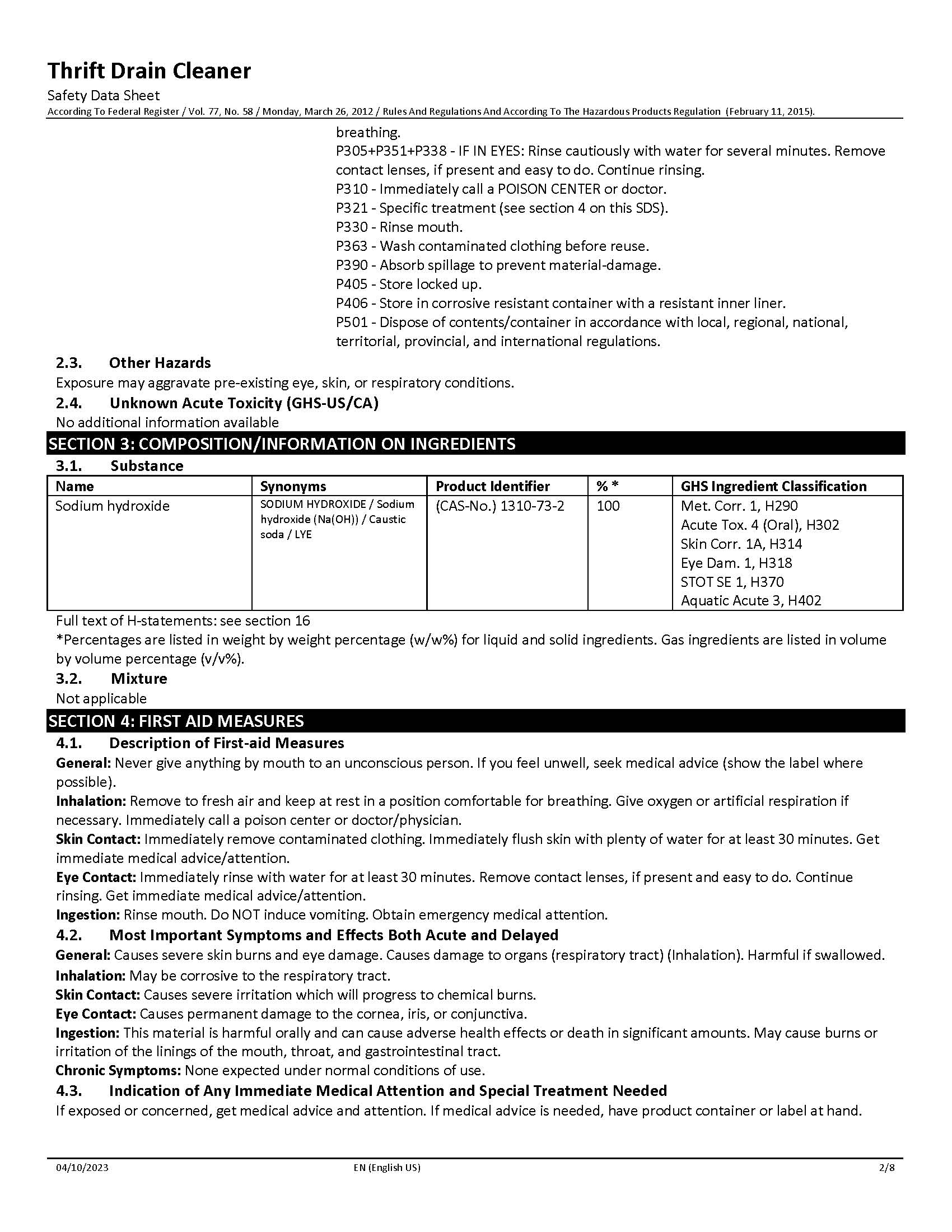
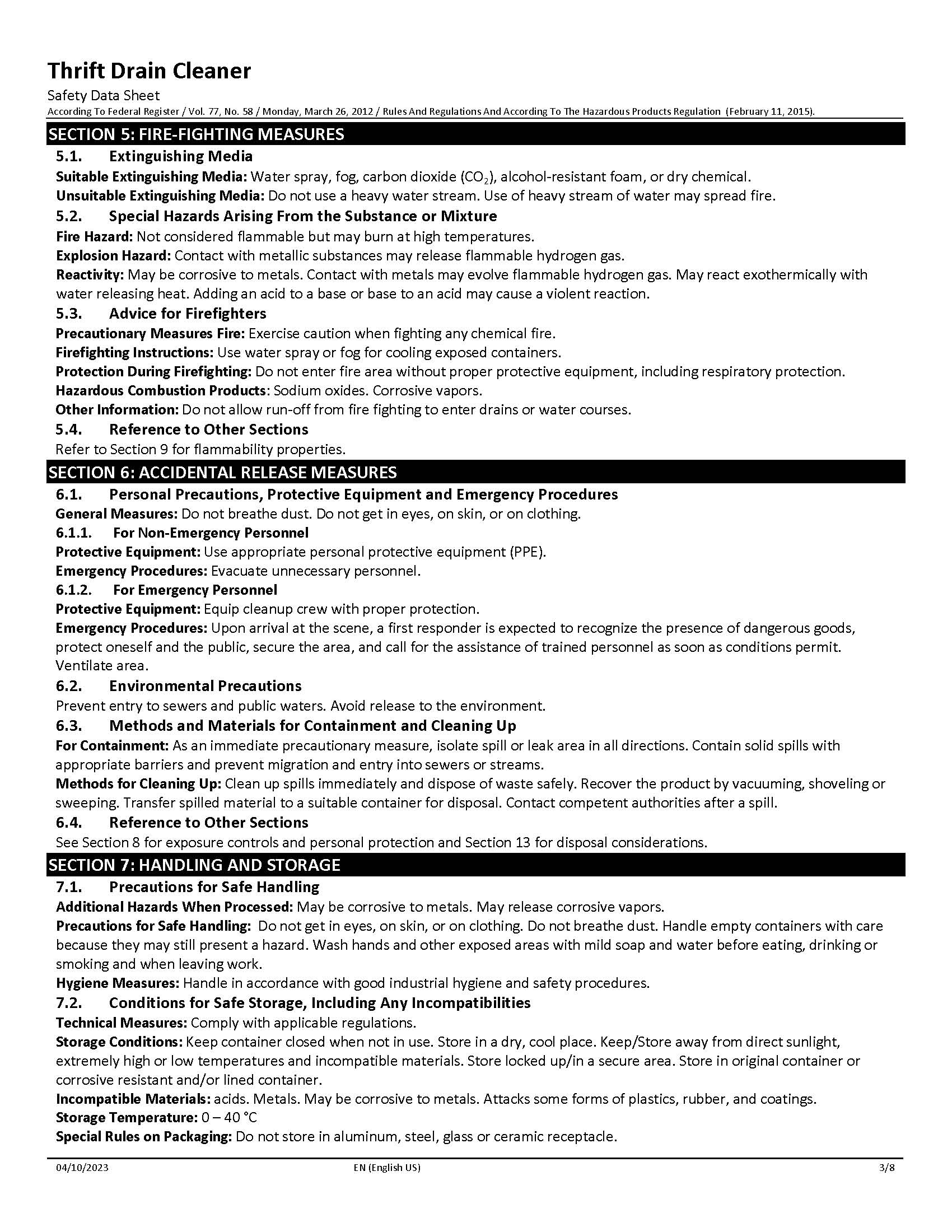
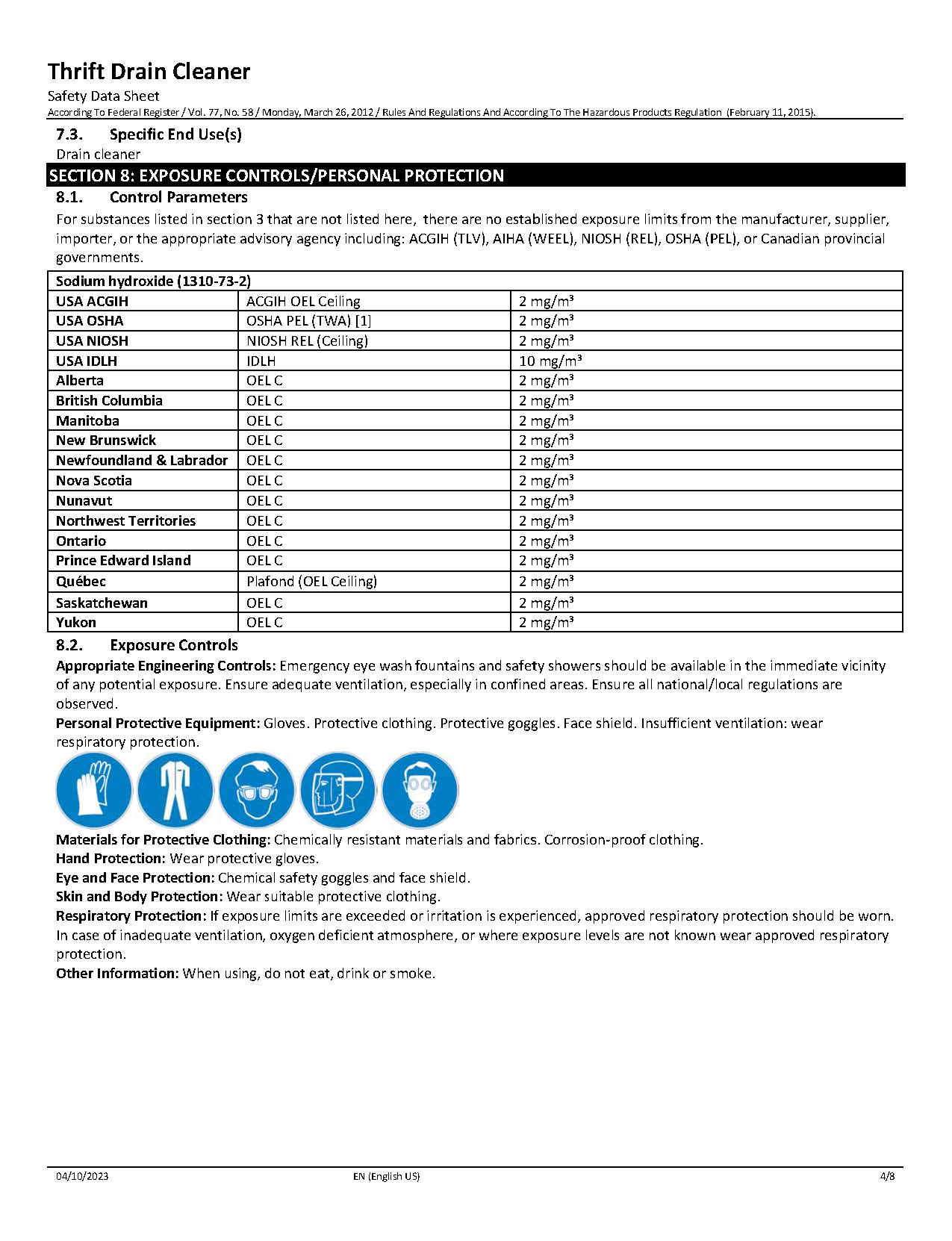
Material Safety Data Sheet

U.S. Department of Labor

May be used to comply with OSHA’s Hazard Communication Standard, 29 CFR 1910 1200. Standard must be consulted for specific requirements.

Occupational Safety and Health Administration

(Non-Mandatory Form)

Form Approved

OMB No. 1218-0072

IDENTITY (as Used on Label and List)

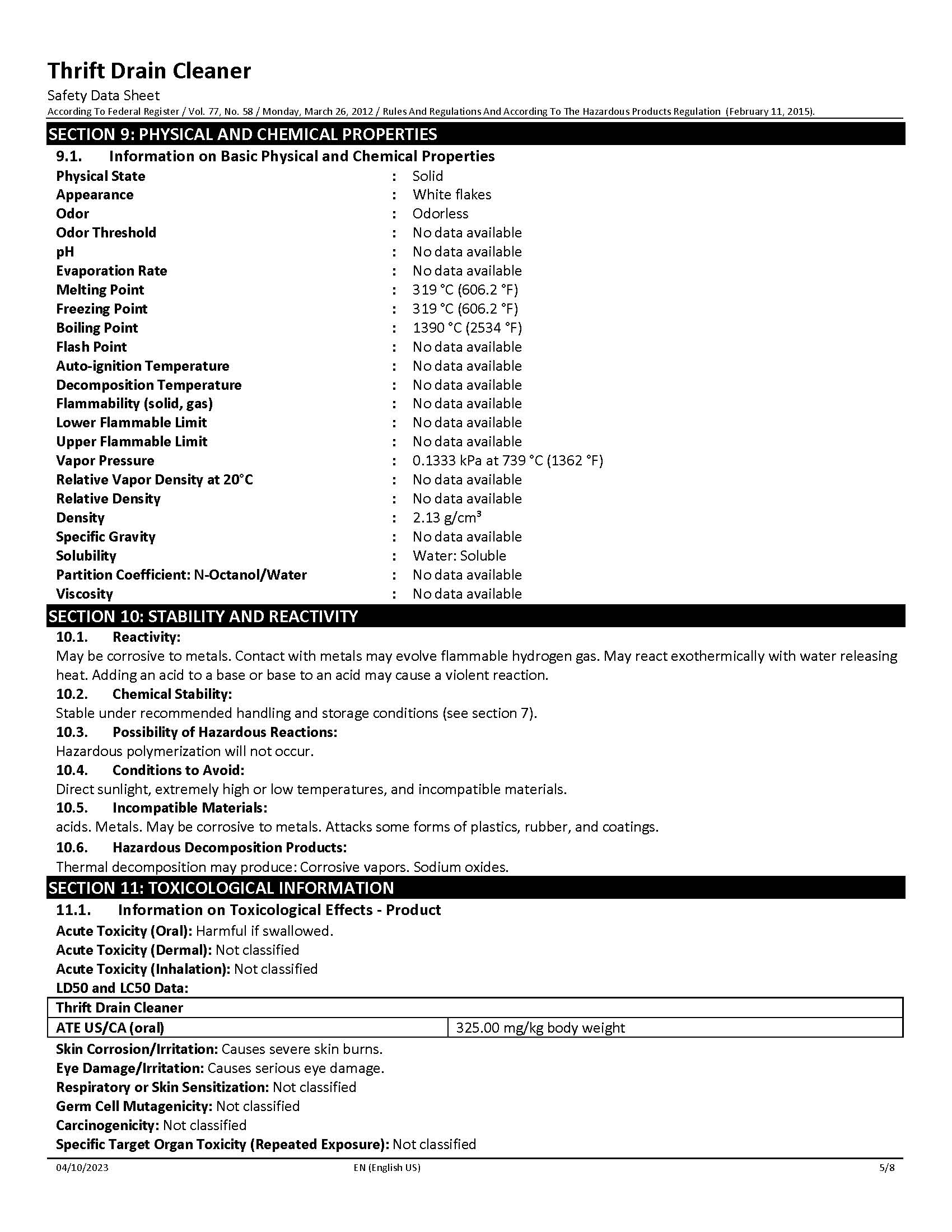
THRIFT DRAIN CLEANER

Note: Blank spaces are not permitted. If any item is not
applicable or no information is available, the space
must be marked to indicate that.

Section I

Manufacturer’s name

JR2D, INC.

Emergency Telephone Number

1-800-424-9300

Address (Number, Street, City, State and ZIP Code)

Telephone Number for Information 936-327-5723

3435 St. Hwy. 146 S.

Date Prepared 6/1/08

Livingston, TX 77351

Signature of Preparer (optional)

Section II—Hazardous Ingredients/Identity Information

Hazardous Components (Specific Chemical Identity, Common Name(s))


OSHA PEL


ACGIH TLV

Other Limits Recommended


% (optional)

Caustic Soda-Sodium Hydroxide 2 2 None 99


Section III—Physical/Chemical Characteristics

Boiling Point

F-2530

Specific Gravity (H20 = 1)

2.13

Vapor Pressure (mm Hg)

20

Melting Point

F-590

Vapor Density (AIR = 1)

Air=1

Evaporation Rate (Butyl Acetate = 1)

N/A

Solubility in Water 100%

Appearance and Odor White Solid-No Odor

Section IV—Fire and Explosion Hazard Data

Flash Point (Method Used) N/A

Flammable Limits None

LEL N/A

UEL N/A

Extinguishing Media This Material is not combustible. Contact with water may generate enough heat to ignite combustible materials.

Special Fire Fighting Procedures None


Unusual Fire and Explosion Hazards This Material melts at 590 degrees F. Hot molten material will react violently with water. It

Will react with metals such as Aluminum, Tin, and Zinc to produce flammable Hydrogen Gas.

(Reproduce locally) OSHA 174 Sept. 1985


Section V—Reactivity Data

Stability

Unstable


Conditions to Avoid

This product is stable.

Stable X


Keep water and moist air out of the container.

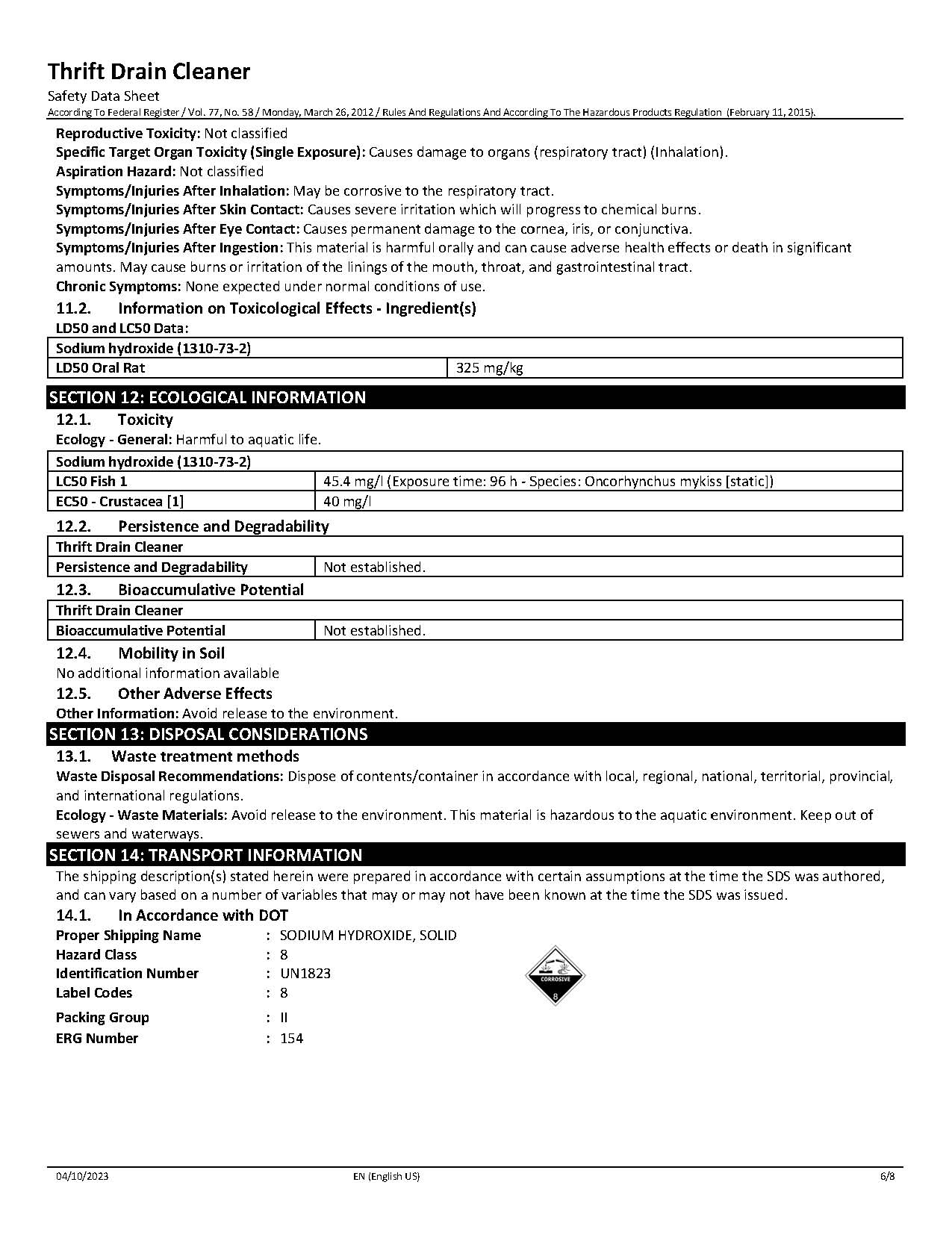
Incompatibility (Materials to Avoid) Acids, combustible materials, Aluminum, Tin and Zinc.

Hazardous Decomposition or Byproducts None

Hazardous
Polymerization

May Occur


Conditions to Avoid


Will Not Occur

X


Section VI—Health Hazard Data

Route(s) of Entry

Inhalation? X

Skin? X

Ingestion? X

Health Hazards (Acute and Chronic)

Corrosive to the entire Respiratory Tract. Brief contact to the eyes may cause severe damage. Causes rapid burning and

Severe pain to the mouth, throat and digestive tract when swallowed, some effects may be delayed.

Carcinogenicity

NTP?

IARC Monographs?

OSHA Regulated?

This material is not considered to be a carcinogen by any of the above.

Signs and Symptoms of Exposure

Burning of eyes, skin, mouth, etc.

Medical Conditions
Generally Aggravated by Exposure

None known

Emergency and First Aid Procedures Call physician immediately

External-Flood with water for 15 minutes. Eyes flush with water for 15 minutes. Internal-drink large quantities of water.

Section VII—Precautions for Safe Handling and Use

Steps to Be Taken in Case Material Is Released or Spilled

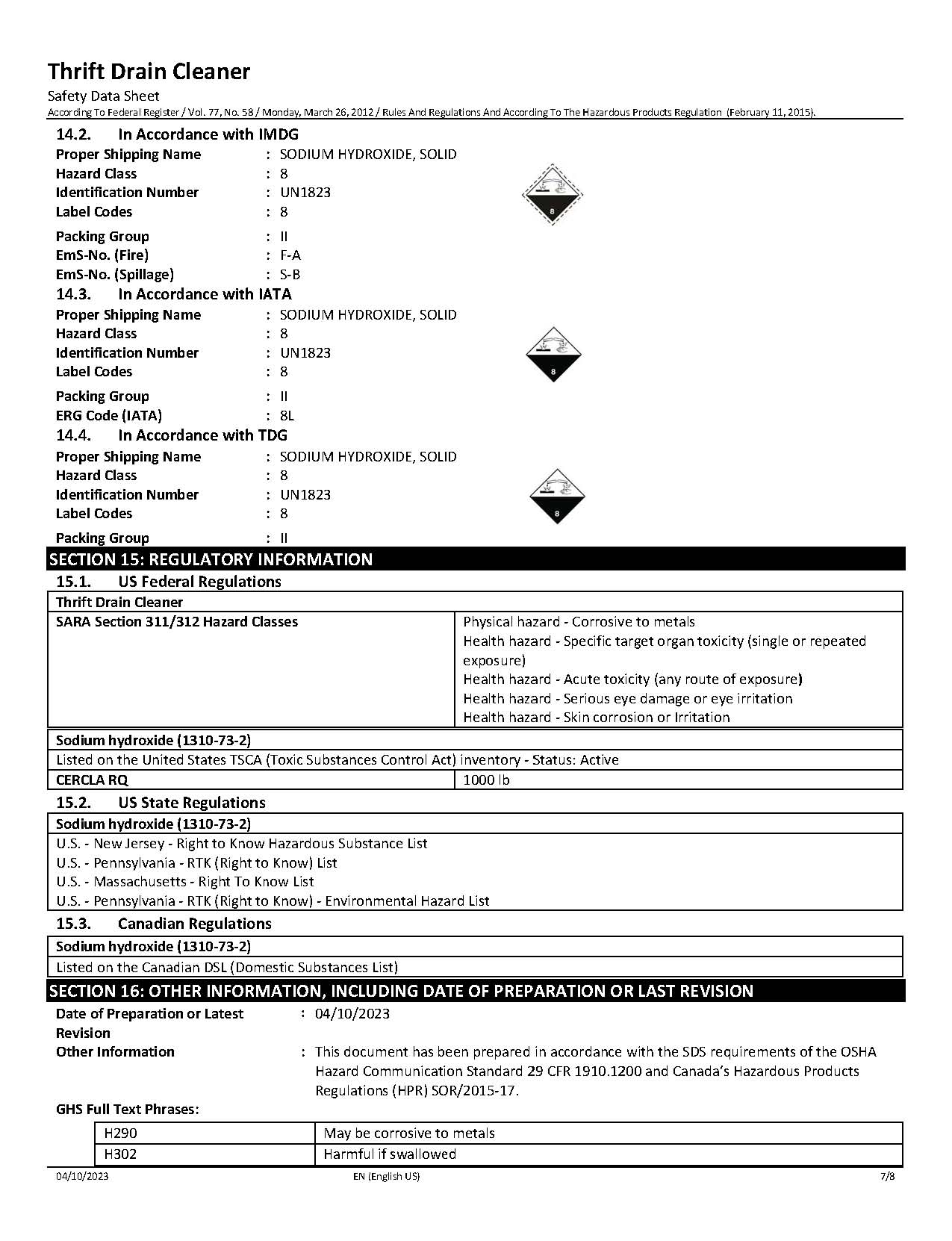
Wear rubber boots, rubber gloves and eye goggles. Sweep up and dispose in sewage drain, follow with lots of water.


Waste Disposal Method

In sewage drain followed by large quantities of water.

Precautions to Be Taken in Handling and Storing

Store in dry place with lid on tightly. Keep out of the reach of children.

Other Precautions

None

Section VII—Control Measures

Respiratory Protection (Specify Type)

Ventilation

Local Exhaust X

Special


Mechanical (General)

Other

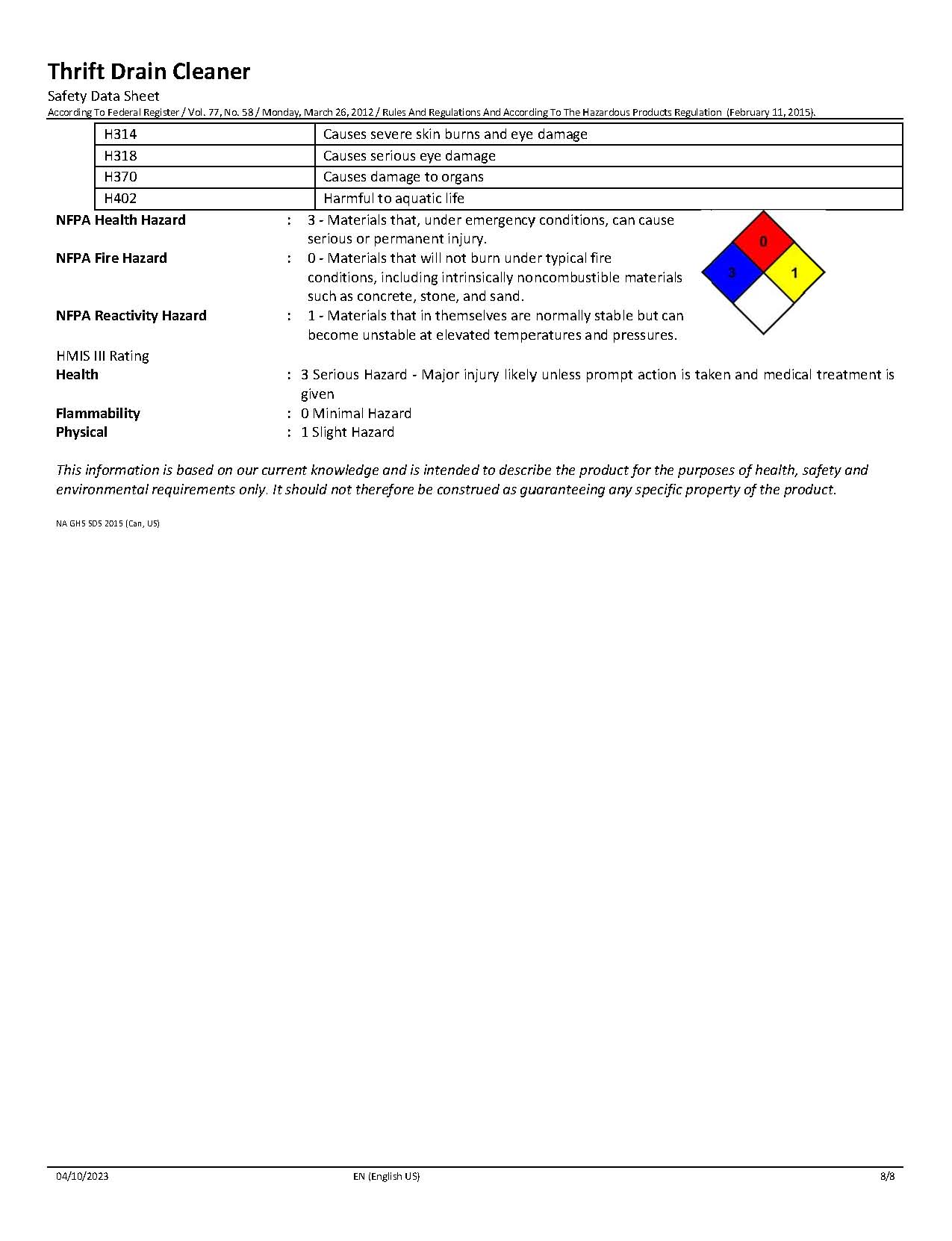
Protective Gloves Rubber gloves.

Eye Protection Eye goggles

Other Protective Clothing or Equipment None

Work/Hygienic Practices Keep Container tightly closed when not in use.